

Alaska is sounding the alarm for fisheries in the United States
By Whit Fosburgh
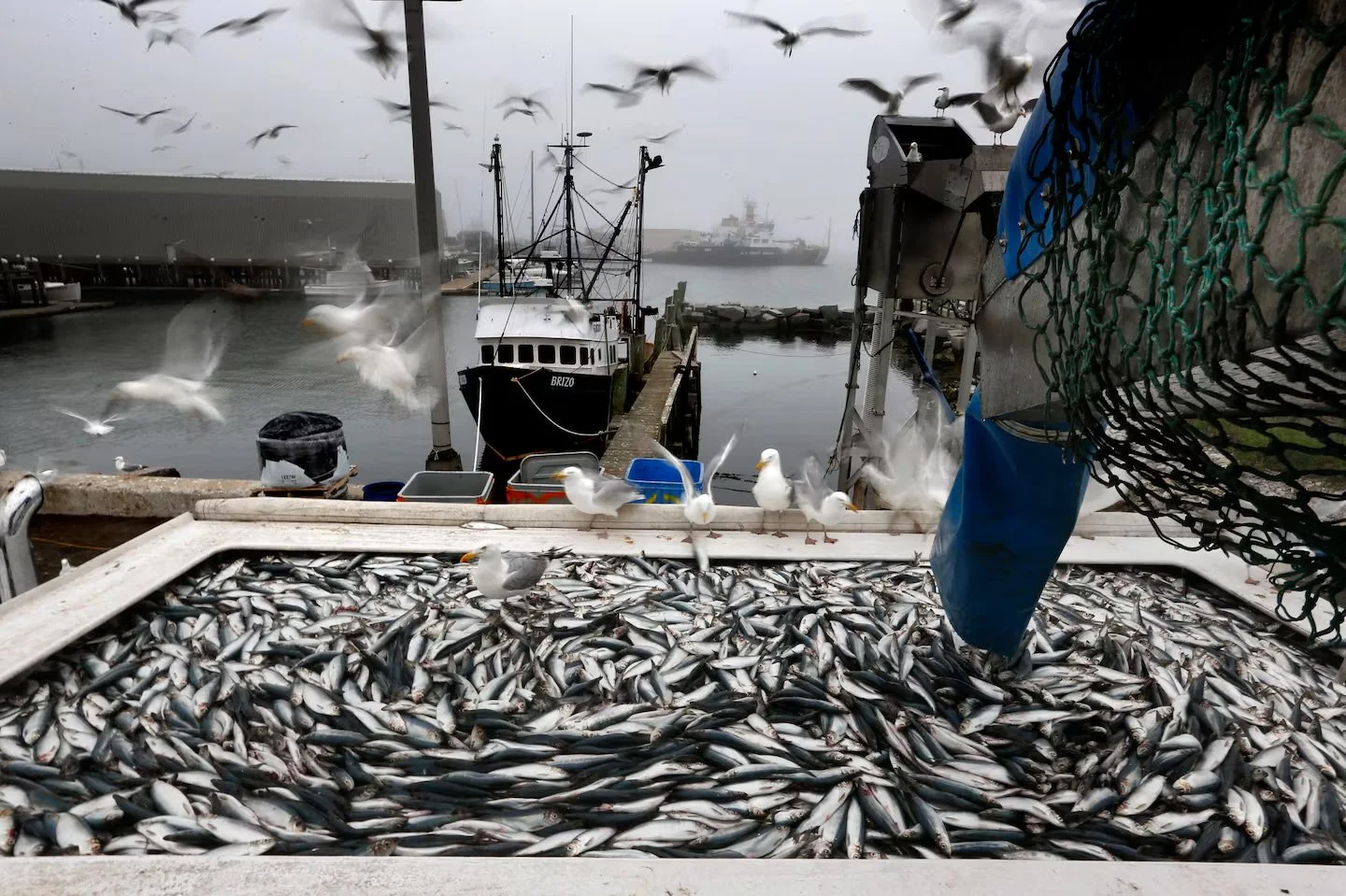
Herring are unloaded from a fishing boat in Rockland, Maine. (AP Photo/Robert F. Bukaty, File)
It is rare to see fisheries take center stage in a political campaign, but that is what is happening now in Alaska. For those of us on the other side of the country, we hope this is a harbinger of what is to come.
As in Alaska, we are seeing massive industrial boats wreak havoc on small commercial and recreational fisheries in the Atlantic and Gulf. In the Northeast, midwater trawlers target Atlantic herring and mackerel using pair trawls, in which two boats pull a football field-sized net that indiscriminately catches everything, including severely depleted river herring.
By 2019, herring and mackerel populations had collapsed. The industry then received an $11 million federal bailout for the disaster it created.
Along the Atlantic and Gulf coasts, two foreign-controlled companies catch more than 4 billion menhaden, also known as bunker or pogies, each year using spotter planes, mother ships and chase boats. The fish are reduced to fishmeal and pet food rather than used primarily for human consumption. Much of that product is exported to feed farmed salmon and shrimp that are later imported back into the U.S. to compete against American fishermen.
The consequences ripple throughout the marine ecosystem and coastal economy. With herring and mackerel largely unavailable, New England’s lobster industry has declined for four straight years as bait prices have increased fivefold. Maine lobstermen now rely heavily on menhaden for bait, often from other states, while the average price of a lobster roll has climbed from about $14 a decade ago to roughly $40 today.
Along the Atlantic coast, striped bass depend heavily on menhaden, and as menhaden have declined through overharvest, so has the striped bass fishery, which supports an estimated 100,000 jobs and generates billions in economic activity. Ospreys, which also depend heavily on menhaden, are experiencing 90% nest failure in the Chesapeake Bay, and chicks are starving to death in their nests.
In the Gulf, industrial menhaden nets catch more than 150 million nontarget fish each year, including redfish, sea trout and croaker, while recreational anglers face tighter bag limits and shorter seasons.
What are managers doing to conserve the forage base? Not much. Herring and mackerel remain trapped in a cycle of optimistic stock assessments, excessive quotas, collapse and taxpayer bailouts. For menhaden, managers consistently favor industrial harvest over recreational fishing, bait fisheries and conservation.
No example is more illustrative than the Atlantic States Marine Fisheries Commission, which manages menhaden and striped bass. In 2019, it adopted ecosystem management, requiring managers to consider the needs of predators before setting harvest limits. Scientists initially recommended a significant quota reduction, but after revising their population estimates upward, managers instead increased the quota by more than 50,000 tons.
Last fall, those same scientists acknowledged that the revised estimates were wrong and that menhaden abundance was roughly 40% lower than previously believed. Yet managers adopted only a token reduction, giving striped bass a 0% chance of recovery under the commission’s own analysis while effectively abandoning ecosystem management.
The common denominator between Alaska and the Atlantic and Gulf is that industrial fleets are depleting American resources upon which far larger fisheries depend. Though they support only a fraction of the jobs, they continue to prevail through their influence over politics, science and fisheries management.
Perhaps that can change in Alaska.
The public is beginning to recognize that when the bottom of the food chain is overexploited, everyone pays the price. Now politicians must put America, the little guys and the oceans first.
Whit Fosburgh is executive director of the Forage Fish Campaign and former longtime president and CEO of the Theodore Roosevelt Conservation Partnership.