

A key commission will decide next month whether to limit the commercial catch of menhaden, a small fish coveted by seabirds, off the Atlantic coast.
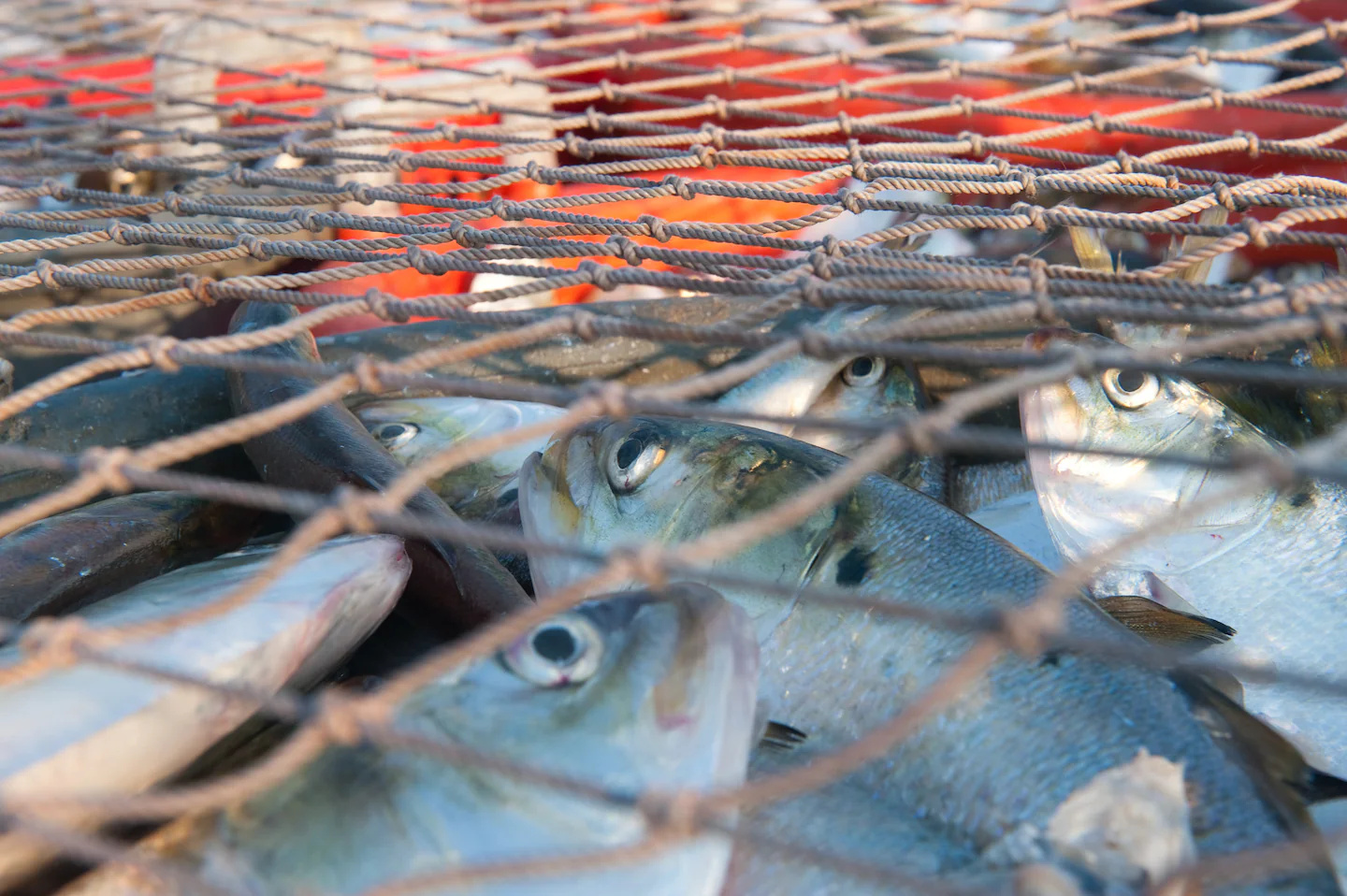
Menhaden caught and sold for bait on Tilghman Island in Maryland. (Sarah L. Voisin/The Washington Post)
By Mark Robichaux
Dozens of federal and state lawmakers are calling for new limits on industrial fishing for menhaden, the small, oily fish at the base of the Atlantic food web as regulators prepare to voice next month on whether to cut the catch in the Chesapeake Bay.
The push comes in the wake of news that ospreys in the Chesapeake Bay have just had their worst breeding season on record. In the bay’s saltier waters, where the birds depend most on menhaden, 81 percent of nesting pairs failed to raise a single chick, and researchers found young birds starving in their nests. Anglers are seeing fewer schools of menhaden and catching fewer game fish, according to the Virginia Saltwater Sportfishing Association.
Ten members of Congress, 29 Maryland legislators and a coalition of New York and New Jersey fishing groups have pressed regulators in recent weeks. Sen. Chris Van Hollen and Rep. Sarah Elfreth, both Maryland Democrats, led an Oct. 9 letter signed by eight fellow Democrats from the House and Senate. The Maryland state lawmakers’ Sept. 25 letter, signed by 22 Democrats and seven Republicans, went to Maryland’s fisheries commissioners.
However, the Menhaden Fisheries Coalition, an industry group, urged the commission a week later to reject further cuts to the bay cap “until the research can establish their necessity and likely benefits.”
Congress has provided $2.5 million for a Chesapeake menhaden survey. The commission, which will oversee the money, said work will likely begin early next year and produce results sometime in 2028. Virginia separately approved $2 million in June for the Virginia Institute of Marine Science to begin one over the next two years. Ask The Post AIDive deeper
Omega Protein — which runs a plant that processes the majority of the Atlantic Coast’s commercial menhaden catch — noted that the commission has not classified menhaden as overfished by the commission’s own measure and that no study has established a link between starving osprey chicks and the commercial catch. Ocean Harvesters, based in Reedville, Virginia, sells its catch to Omega Protein, which grinds it into fish meal and oil.
Ben Landry, a spokesman for Ocean Harvesters’ parent company, has said tighter Chesapeake limits aren’t justified “without a demonstrated biological need.”
As the fall striped bass run gets underway, anglers and charter captains led by the Jersey Coast Anglers Association are petitioning Commerce Secretary Howard Lutnick to ban commercial fishing for menhaden off New York and New Jersey. The petition, being released Wednesday by fishing groups and businesses, calls menhaden the “food in the water” for striped bass, bluefin tuna and other game fish.
The fleet, the petitioners wrote, “is having unprecedented difficulty” catching menhaden near its Chesapeake base and is “increasingly looking to the north.” They want an emergency closure in federal waters from May through December, where the fleet already fishes.
The Atlantic States Marine Fisheries Commission, a 15-state body, is scheduled to vote on the bay cap Nov. 10 at its annual meeting. The group will consider lowering the total quota by as much as half and spreading out the catch across the season. Maryland state lawmakers suggested tying the cap to 13.6 percent of the coastwide limit, which would amount to a 50 percent cut, and never let it rise above 51,000 metric tons.
Tina Berger, the commission’s communications director, did not comment on the letters but said they will be shared with board members along with other public comments.
The most the fleet can take from the Chesapeake Bay in a year has been set at 51,000 metric tons, or about 112 million pounds, since 2018. When the commission cut the coastwide catch 20 percent this year, the cap for the bay stayed the same. The fleet caught nearly 300 million pounds in 2024, most of it in the ocean.
The congressional letter urged “the strongest menhaden protections proposed.”
Rep. Frank Pallone Jr. (D-New Jersey), one of the signers, wrote on Facebook, “All kinds of birds and marine life depend on menhaden as a food source, but industrial menhaden harvesting is putting these species at risk.”
Rep. Bobby Scott (D-Virginia), co-chair of the Chesapeake Bay Watershed Task Force and the only Virginian to sign, said in a statement that the commission “must consider lowering catch limits until further research on menhaden populations in the Bay is completed.”