

Study links poor Chesapeake Bay osprey reproduction to food stress, but menhaden debate continues
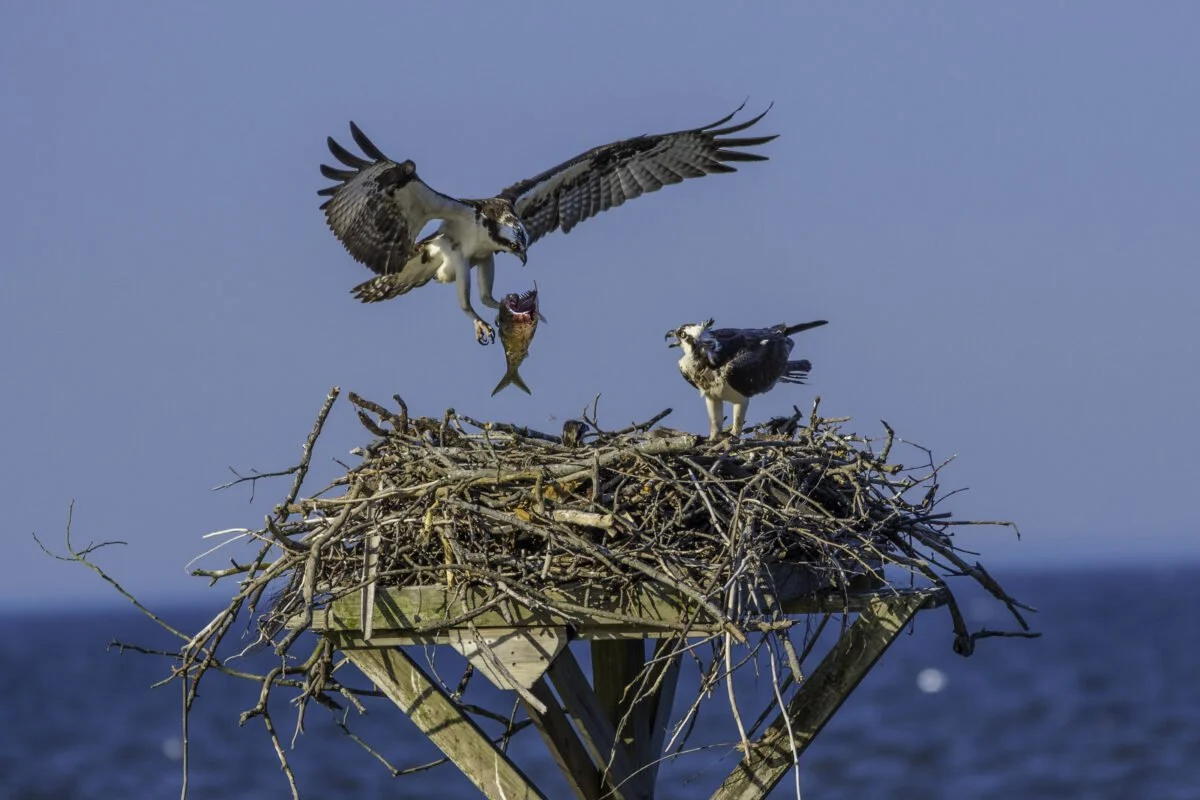
A new study of Chesapeake Bay ospreys found that nesting pairs in high-salinity areas of the Bay, including the Eastern Shore, produced fewer young than pairs in lower-salinity waters.
The study, titled “Widespread reproductive deficits in Chesapeake Bay ospreys,” monitored 571 nests during the 2024 breeding season. Researchers compared osprey reproduction in high-salinity areas of the Chesapeake Bay with lower-salinity areas such as parts of the Rappahannock and James rivers.
The Eastern Shore was one of 10 high-salinity study areas included in the report. According to the study, 57 osprey pairs were monitored in the Eastern Shore sample area. Of those, 14 percent were not documented laying eggs, 40.4 percent were successful, and 45.6 percent failed. The Eastern Shore reproductive rate was 0.75 young per pair.
That was below the level researchers cited as needed to maintain a stable osprey population. However, the Eastern Shore site performed better than several other high-salinity areas in the study, including Fleets Bay, Choptank River, Mobjack Bay, York River, and Poquoson River.
Across all high-salinity areas, researchers found an average reproductive rate of 0.51 young per pair, compared with 1.36 young per pair in low-salinity areas. The study reported higher rates of nest failure, brood reduction, and nestling loss in high-salinity waters, which the authors said are signs of food stress.
The study suggests that reduced availability of Atlantic menhaden may be a primary reason for poor osprey reproduction in higher-salinity portions of the Bay. Menhaden are oily, energy-rich fish that are an important food source for ospreys and many other Bay predators. They are also a source of never ending debate between industry, recreational fishing, conservationists and scientists.
The authors also reviewed other possible causes, including predators, weather, contaminants, disease, nest competition, and population density. They concluded those factors did not appear to explain the broad pattern seen across the high-salinity study areas, though they acknowledged that several factors can affect osprey reproduction.
The findings are likely to add to the ongoing debate over menhaden management in the Chesapeake Bay. The Atlantic States Marine Fisheries Commission manages Atlantic menhaden as a coastwide stock and says the stock is not overfished and is not experiencing overfishing under current ecological reference points. At the same time, ASMFC has acknowledged that current models cannot determine menhaden abundance solely within Chesapeake Bay or define what level of menhaden would be sufficient in the Bay.
ASMFC has reduced the 2026 coastwide menhaden total allowable catch by 20 percent and has started an addendum process that could reduce the Chesapeake Bay reduction fishery cap by up to 50 percent and spread the harvest more evenly through the season. The current Bay cap is 51,000 metric tons.
While the Eastern Shore osprey sample did not show the worst reproductive results in the study, it was still below the population-maintenance level used by the researchers.
The study’s authors said more Bay-specific data on adult menhaden abundance would help clarify the relationship between osprey reproduction and local forage fish availability.
The study was conducted by researchers from the Center for Conservation Biology at William & Mary, the Virginia Aquarium & Marine Science Center, the Maryland-National Capital Park and Planning Commission’s Patuxent River Park, and the U.S. Geological Survey’s Eastern Ecological Science Center.